

TL;DR
Match the standard: Always align your closure with industry-standard glass bottle neck finishes (e.g., GPI 28-400) to prevent leakage.
Consider the product: High-proof spirits often favor T-top corks for premium feel, while wines and beverages increasingly rely on screw caps for consistent oxygen control.
Quality control is key: A great bottle needs precise manufacturing tolerances. Always request sample testing before mass production.
Understanding Glass Bottle Neck Finishes
The term “neck finish” refers to the specific shape, threads, and dimensions of the very top of a glass bottle where the closure is applied. It dictates what kind of cap, cork, or stopper can be used. Standardization is critical in global packaging. For instance, the Glass Packaging Institute (GPI) sets rigorous dimensional standards that manufacturers follow to ensure compatibility between bottles and caps produced by different suppliers.
If you are sourcing for your beverage brand, understanding these specifications early will save you time and money. A mismatch of even a millimeter can lead to product spoilage during international shipping.
Cork vs. Screw Cap: The Great Debate
The Tradition of Cork (T-Top & Natural)
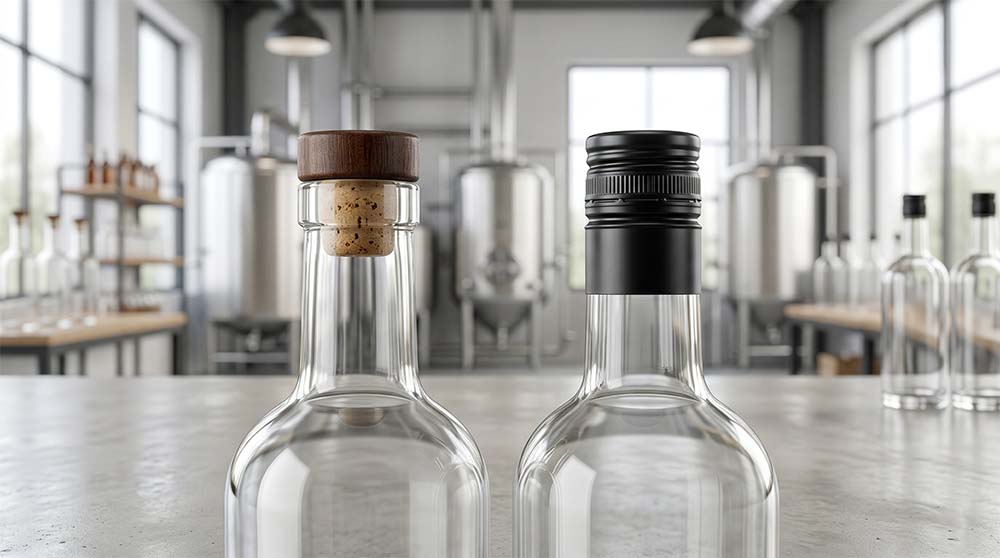
Corks have been the traditional choice for centuries. Premium spirits often utilize T-top corks (a cork shank with a wooden, plastic, or metal top) because they offer a satisfying “pop” and signal high quality to the consumer. However, natural cork is porous and susceptible to Trichloranisole (TCA) contamination, commonly known as “cork taint.”
The Efficiency of Screw Caps (RoPP & Continuous Thread)
Screw caps, particularly Roll-on Pilfer Proof (RoPP) aluminum caps and continuous thread plastic caps, offer unmatched consistency. They provide a reliable, airtight seal that protects the liquid from oxidation. When developing a, integrating a standardized threaded finish ensures seamless automated capping on your production line.
Comparison Table: Cork vs. Screw Cap
| Feature | Natural/T-Top Cork | Aluminum Screw Cap (RoPP) |
| Airtightness | Moderate (Allows slight micro-oxygenation) | Excellent (Highly consistent seal) |
| Brand Perception | Premium, Artisanal, Traditional | Modern, Convenient, Reliable |
| Production Cost | Higher | Lower (especially at scale) |
| Tamper Evidence | Requires secondary capsule/shrink band | Built-in breakable ring |
| Best For | Aged Spirits, Premium Wine | Ready-to-Drink beverages, Standard Wine |
Data Insight: How Closures Affect Product Stability
When making a procurement decision, data matters. The choice of closure directly impacts the Oxygen Transmission Rate (OTR), which determines shelf life. According to extensive research by the Australian Wine Research Institute (AWRI), screw caps drastically reduce oxidation variations compared to natural corks.
| Closure Type | Average OTR (ml O2/year) | Impact on Shelf Life |
| Natural Cork | 0.1 to 1.5+ (High variability) | Unpredictable aging; risk of oxidation. |
| Screw Cap (Saran-Tin liner) | 0.0002 to 0.0008 (Highly consistent) | Maximum freshness preservation. |
(Note: Data reflects general industry averages based on AWRI closure trials.)
5-Step Checklist for Buyers
To avoid costly mistakes during sourcing, use this checklist before finalizing your order:
1.Verify the Standard: Ensure the factory provides the exact GPI/GCMI drawing for the neck finish.
2.Check Liner Materials: Confirm that the closure liners are food-grade and comply with FDA Food Contact Materials regulations if exporting to the US.
3.Request Compatibility Testing: Fit the physical caps onto the glass bottles and test for torque and leakage.
4.Evaluate: Ensure the pallets and dividers protect the neck finish from chipping during transit.
5.Review Automation Needs: Confirm the neck finish matches your capping machine’s specifications.
Quality Control: Ensuring a Perfect Seal
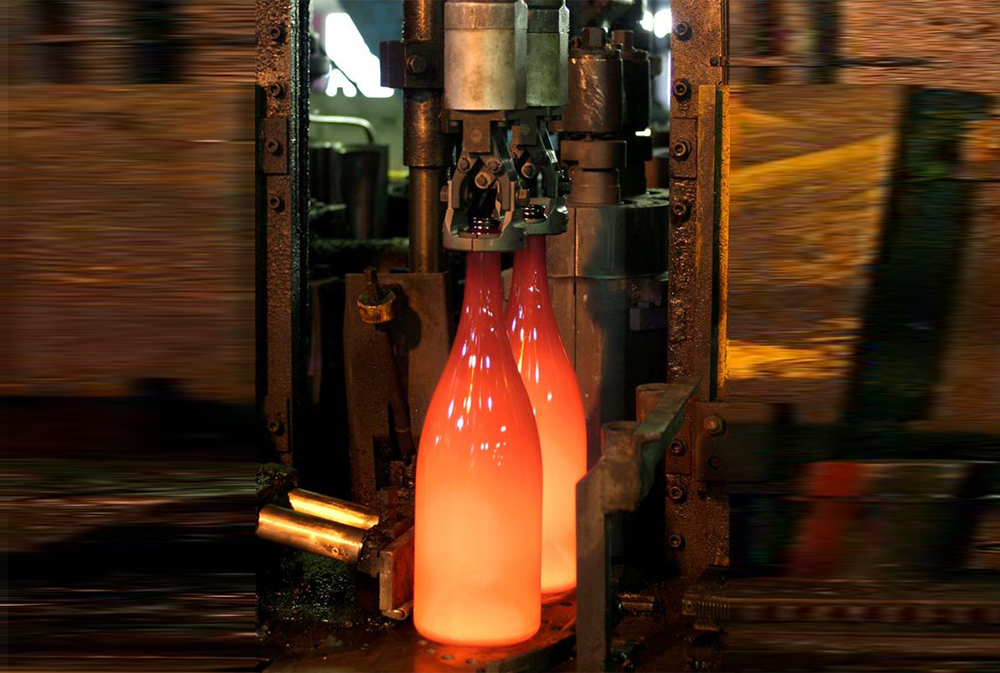
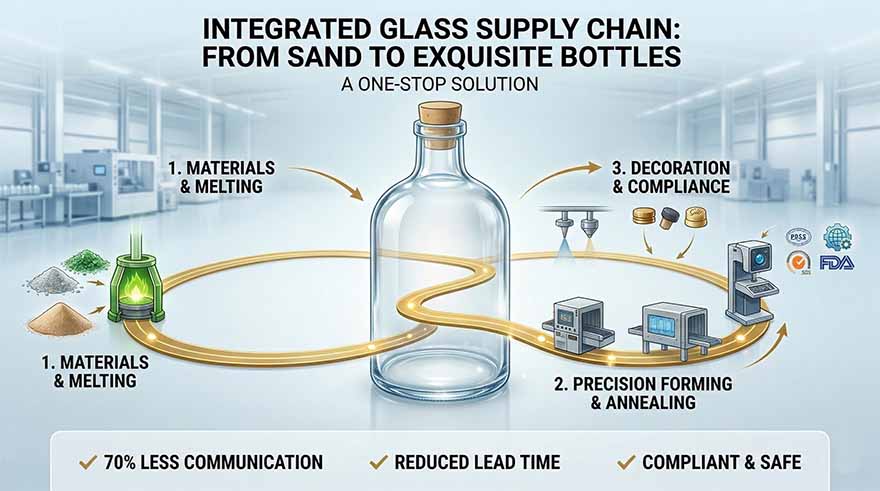
At the factory level, producing a flawless neck finish requires rigorous Quality Control. Glass naturally expands and contracts during molding. To maintain strict tolerances, reputable manufacturers use standard testing methods aligned with ASTM International guidelines for glass containers.
We utilize automated inspection machines and manual “Go/No-Go” gauge testing to verify the inner and outer diameters of every batch. This guarantees that whether you use a synthetic cork or a continuous thread screw cap, the seal will be perfectly airtight, protecting your brand’s reputation.
Frequently Asked Questions (FAQ)
Q1: What does “GPI 28-400” mean? / “GPI 28-400
A: It’s an industry standard. “28” refers to the outer diameter of the neck threads in millimeters, and “400” designates the specific thread style and height.
Q2: Can I use a screw cap on a bottle designed for cork?
A: No. The internal and external profiles of the neck finish are entirely different. You must choose the correct mold from the start.
Q3: Are your glass bottles FDA approved?
A: Yes. High-quality glass is generally recognized as safe (GRAS), and our manufacturing processes align with international food safety standards, including ISO 9001 guidelines.
Q4: Do you supply the closures as well?
A: We manufacture the glass bottles, but we can source and pair them with high-quality closures through our verified supply chain network.
Q5: How do I test if my cap is leak-proof?
A: We recommend conducting vacuum testing and torque application tests during the sampling phase.
Q6: What is the MOQ for custom neck finishes?
A: It depends on the mold design, but typically starts around 10,000 to 20,000 units.
Why Choose Valiant Glass?
Selecting the perfect glass bottle and closure system shouldn’t be a guessing game. As an experienced international exporter and glass manufacturer, Valiant Glass understands the technical precision required for successful bottling lines. From strictly adhering to international neck finish standards to providing robust export packaging that prevents transit breakage, we solve the pain points that procurement managers face daily. Whether you need standard inventory or a custom-molded design tailored to your specific closure requirements, our engineering team ensures dimensional accuracy from the first sample to mass production.